1. Introduction
Free and fair elections envisage inclusion by equal opportunity for all eligible citizens including women under universal adult suffrage. The extent of women’s participation is a key indicator of gender equality in a polity. However, women face barriers at different stages of the electoral process — from enrolment and voting to contestation and representation.
This paper examines the evolution of women’s role in Indian polity from the pre-independence period, the principles enshrined in UN Treaties and the constitutional and legislative framework governing gender participation in India. It then analyses the trajectory of women’s participation across seven decades of General Elections to the Lok Sabha, documenting the ECI’s evolving policies, strategies and action plans for enhancing women’s participation along with outcomes and recognition to the Third Gender in electoral democracy. Finally, the paper mentions about the landmark Constitutional Amendment of 2023 for reservation of seats for women at national and state level.
2. Principles Enshrined in UN Treaties
Participation through universal equal suffrage as a human right was established through two principal instruments: the Universal Declaration of Human Rights (UDHR, 1948) and the International Covenant on Civil and Political Rights (ICCPR, 1966). Three further instruments provide specific guidance on electoral inclusion: the International Convention on the Elimination of All Forms of Racial Discrimination (ICERD, 177 ratifying states); the Convention on the Elimination of All Forms of Discrimination Against Women (CEDAW, 1979, 189 states); and the UN Convention on the Rights of Persons with Disabilities (CRPD, 2006, 186 states).
2.1 World Conferences on Women
UN World Conferences on Women at Mexico City (1975), Copenhagen (1980), Nairobi (1985) and Beijing (1995) progressively elaborated women’s rights to political participation. The Beijing Conference was a landmark turning point, building on preceding conferences and consolidating five decades of legal advances. The Beijing Declaration and Platform for Action remains the most comprehensive global policy document on gender equality (UN Women, 1995).
2.2 Leveraging UN Instruments for Inclusion
Guidance for gender participation laid down under the UN Instruments leveraged through domestication under country legislations helps establish an inclusivity regime. While the UN Treaties lay down over all guidance, the country specific constitutional provisions, legislative instruments and the law that flows there from define the framework for inclusion containing mandate, the enabling and empowering environment for enhancing inter alia gender participation in elections.
2.3 Role of Election Management Bodies
Election Management Bodies (EMBs) are responsible for developing and implementing strategies for the inclusion of all eligible electors, including women, at each step of the electoral process. Multimedia voter education, comprehensive outreach and facilitation for enhanced accessibility are primary vehicles of inclusion employed by EMBs worldwide. In the absence of legislative support for gender parity, EMBs may draw upon plenary powers and international electoral standards to enhance gender participation.
3. Constitutional and Legislative Framework in India
Electoral participation in India is governed by Part XV of the Constitution (Articles 324 to 329-A). Articles 325 and 326 enshrine universal adult suffrage free from discrimination on grounds of religion, race, caste or sex:
Article 325: There shall be one general electoral roll for every territorial constituency for election to either House of Parliament or to the House or either House of the Legislature of a State and no person shall be ineligible for inclusion in any such roll or claim to be included in any special electoral roll for any such constituency on grounds only of religion, race, caste, sex or any of them.
Article 326: The elections to the House of the People and to the Legislative Assembly of every State shall be on the basis of adult suffrage; that is to say, every person who is a citizen of India and who is not less than eighteen years of age on such date as may be fixed in that behalf by or under any law made by the appropriate Legislature and is not otherwise disqualified under this Constitution or any law made by the appropriate Legislature on the ground of non-residence, unsoundness of mind, crime or corrupt or illegal practice, shall be entitled to be registered as a voter at any such election.
3.1 The 73rd and 74th Constitutional Amendments (1993) mandated not less than 33% reservation for women in Panchayati Raj Institutions (PRIs) and Municipalities under Articles 243D and 243T respectively. These are enabling provisions to be read with the respective state legislations as also the Panchayats Extension to Scheduled Areas Act,1996 for Schedule V Areas.
3.2 However, reservation for women in Lok Sabha and the State Legislative Assemblies has finally been provided under the Constitution (One Hundred and Sixth Amendment) Act, 2023.
4. Women in Indian Polity: A Historical Perspective
Women participated actively in the independence movement and have historically held a significant public presence in India. The Women’s Indian Association, established in 1917, demanded franchise for women. The Government of India Act, 1935 granted limited franchise based on literacy, property or marriage criteria. By 1937, there were 80 women legislators in India — at that time the third highest in the world after the US and USSR. Women legislators made substantial contributions to the framing of the Indian Constitution.
4.1 Women in the Constituent Assembly
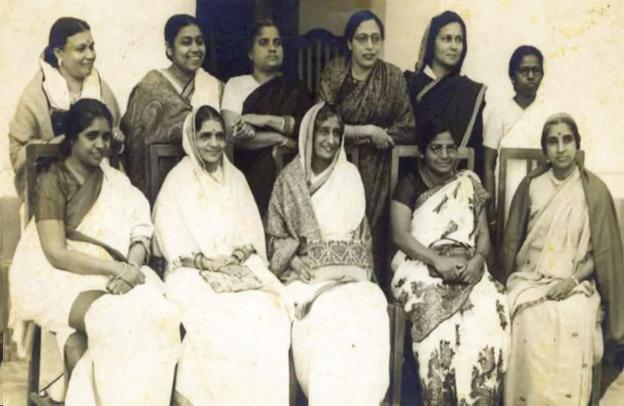
The Constituent Assembly of India comprised 15 women members out of 299 total. Their contribution to drafting the Constitution affirmed the founding commitment to gender equality in independent India’s democratic architecture. In the words of B. R. Ambedkar: “Unity is meaningless without the accompaniment of women. Education is fruitless without educated women and agitation is incomplete without the strength of women.” Photograph 1 is a reminiscence of the importance of Hon’ble Women Members in the Constituent Assembly.
Photograph 1: Women members of the Constituent Assembly formed to draft the Constitution of India
5. Gender Inclusivity in Indian Elections: An Analysis
The trajectory of gender-based inclusion driven by ECI policies and initiatives is examined across the following indicators through General Elections (GE) from 1951–52 onwards: (i) gender inclusion in electoral rolls; (ii) women voter turnout; (iii) women contestants and elected members in the Lok Sabha; (iv) women in the Rajya Sabha; and (v) the Third Gender.
It may be mentioned at this point that women in India have held high elective offices such as the President of India, Prime Minister, Speaker of Lok Sabha, Chief Ministers etc., from time to time and made a notable contribution to Indian polity.
5.1 Inclusion of Women in Electoral Rolls
India emerged as the world’s largest electoral democracy with 173 million electors, including approximately 78 million women, ready for the first General Election of 1951–52. A notable early challenge was the sociocultural convention by which women identified themselves by relation to male relatives rather than their own names. The Election Commission issued directions making registration under one’s own name mandatory — a foundational act of recognition of women’s individual electoral identity.
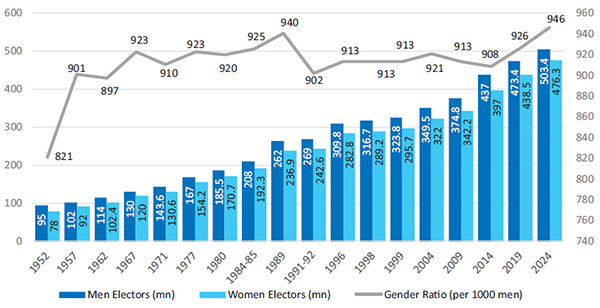
Table 1 presents the trajectory of gender inclusion in the Indian electorate from 1952 to 2024. The number of women electors grew from 78 million in 1952 to 476.3 million in 2024 — a 489.7% increase, outpacing the 416% increase in male electors over the same period. The Electorate Gender Ratio improved from 821 to 946. The steady growth of women electorate as well as gender ratio can be appreciated from Figure 1.
Table 1: Table 1: Trajectory of Gender Inclusion in Indian Electorate (1952–2024).
| Year |
Men Electors (mn) |
Women Electors (mn) |
Women Share (%) |
Total Electors (mn) |
Gender Ratio |
| 1952 |
95.0 |
78.0 |
45.1 % |
173.0 |
821 |
| 1957 |
102.0 |
92.0 |
47.2 % |
194.0 |
901 |
| 1962 |
114.0 |
102.4 |
47.3 % |
216.4 |
897 |
| 1967 |
130.0 |
120.0 |
48.0 % |
250.0 |
923 |
| 1971 |
143.6 |
130.6 |
47.6 % |
274.2 |
910 |
| 1977 |
167.0 |
154.2 |
48.0 % |
321.2 |
923 |
| 1980 |
185.5 |
170.7 |
47.9 % |
356.2 |
920 |
| 1984-85 |
208.0 |
192.3 |
48.0 % |
400.4 |
925 |
| 1989 |
262.0 |
236.9 |
47.5 % |
498.9 |
940 |
| 1991-92 |
269.0 |
242.6 |
47.4 % |
511.5 |
902 |
| 1996 |
309.8 |
282.8 |
47.7 % |
592.6 |
913 |
| 1998 |
316.7 |
289.2 |
47.7 % |
605.9 |
913 |
| 1999 |
323.8 |
295.7 |
47.7 % |
619.5 |
913 |
| 2004 |
349.5 |
322.0 |
48.0 % |
671.5 |
921 |
| 2009 |
374.8 |
342.2 |
47.7 % |
717.0 |
913 |
| 2014 |
437.0 |
397.0 |
47.6 % |
834.1 |
908 |
| 2019 |
473.4 |
438.5 |
48.1 % |
912.0 |
926 |
| 2024 |
503.4 |
476.3 |
48.6 % |
979.8 |
946 |
Sources: ECI Statistical Reports 1952–2024; General Election to Lok Sabha 2024, ECI.
Note: Gender Ratio = women per 1,000 men
Figure 1: Growth of Women Electors in General Election (1952-2024) with Electorate Gender Ratio (Women per 1000 Men)
5.2 Women Voter Turnout
Overall voter turnout in GE 1951–52 was 45.67%, comprising approximately 53% of men and 37% of women voters. Despite low female literacy (approximately 16%) and conservative social conventions, women participated in large numbers. The ECI established 27,527 separate polling booths for women voters and appointed women officers to facilitate their participation.
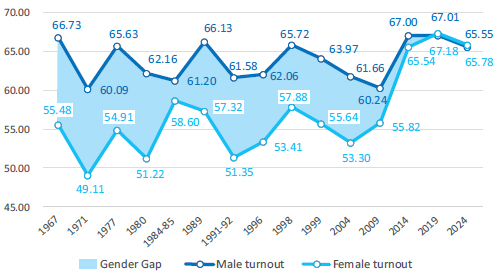
Women’s voter turnout rose from 38.8% in GE 2 (1957) to 65.8% in GE 18 (2024). In absolute numbers, 35.7 million women voted in 1957, rising to 312.8 million in 2024. A landmark development occurred in GE 2019, when 23 states and union territories recorded higher women voter turnout than men — the first reversal of the historical gender gap, which moved from -16.7 percentage points in 1962 to +0.17 in 2019 (Figure 2).
Figure 2: Male vs. female voter turnout (1967–2024) with gender gap. The progressive narrowing and eventual reversal in 2019 is the defining trend
5.3 Women Contestants and Elected Members in Lok Sabha
In GE 1951–52, 43 women candidates contested (2.3% of total contestants), of whom 22 were elected (4.5% of total seats).
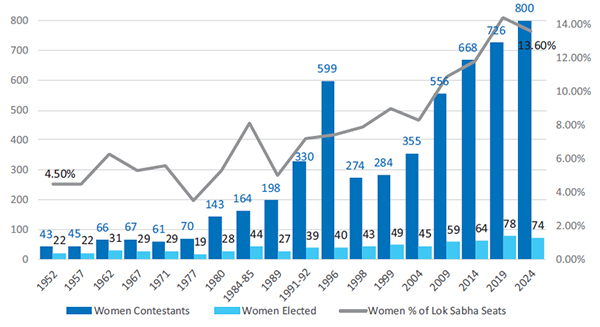
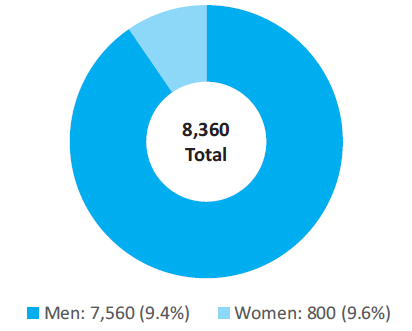
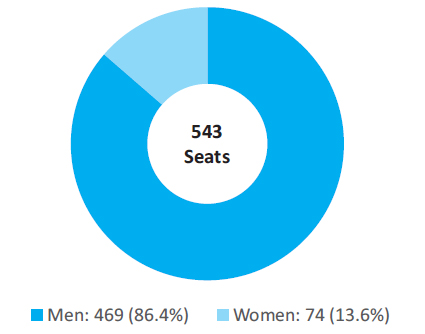
By GE 2024, the number of women contestants had risen to 800 (9.6% of contestants), of whom 74 won (13.6% of seats).
Table 2 presents the complete data across all 18 General Elections.
Table 2: Women’s Participation in General Elections to the Lok Sabha (1952–2024)
| Year |
Total Contestants |
Women Contestants |
Women % of Contestants |
Women Elected |
Women % of LS Seats |
Women Electors % Total |
| 1952 |
1874 |
43 |
2.3% |
22 |
4.5% |
45.1% |
| 1957 |
1519 |
45 |
3.0% |
22 |
4.5% |
47.2% |
| 1962 |
1985 |
66 |
3.3% |
31 |
6.3% |
47.3% |
| 1967 |
2369 |
67 |
2.8% |
29 |
5.3% |
48.0% |
| 1971 |
2784 |
61 |
2.2% |
29 |
5.6% |
47.6% |
| 1977 |
2439 |
70 |
2.9% |
19 |
3.5% |
48.0% |
| 1980 |
4629 |
143 |
3.1% |
28 |
5.3% |
47.9% |
| 1984-85 |
5492 |
164 |
2.9% |
44 |
8.1% |
48.0% |
| 1989 |
6160 |
198 |
3.2% |
27 |
5.0% |
47.5% |
| 1991-92 |
8749 |
330 |
3.8% |
39 |
7.2% |
47.4% |
| 1996 |
13952 |
599 |
4.3% |
40 |
7.4% |
47.7% |
| 1998 |
4750 |
274 |
5.8% |
43 |
7.9% |
47.7% |
| 1999 |
4648 |
284 |
6.1% |
49 |
9.0% |
47.7% |
| 2004 |
5435 |
355 |
6.5% |
45 |
8.3% |
48.0% |
| 2009 |
8070 |
556 |
6.9% |
59 |
10.9% |
47.7% |
| 2014 |
8251 |
668 |
8.1% |
64 |
11.8% |
47.6% |
| 2019 |
8054 |
726 |
9.0% |
78 |
14.4% |
48.1% |
| 2024 |
8360 |
800 |
9.6% |
74 |
13.6% |
48.6% |
Sources: ECI Electoral Statistics at a Glance-2025
Figure 3 presents the trajectory of women contestants and the actual number of women members from 1952 to 2024 in Lok Sabha. There is a steady increase in number of women contestants that goes up to 599 in 1996 followed by sudden drop in 1998 and thereafter steady increase. Number of actual winners breaches 10% level in 2009 for the first time and goes up to 14.4% in 2019.
Figure 3: Women Contestants vs Women Elected to Lok Sabha (1952–2024) with % of Total Seats
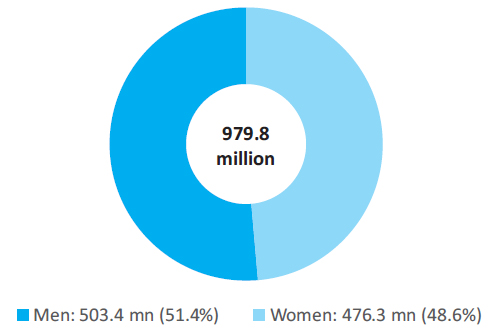
Figure 4. Gender Profile — Lok Sabha General Election 2024 (Electorate, Contestants, Members Elected)
Electorate Composition GE 2024
Lok Sabha Contestants GE 2024
Members Elected GE 2024
5.4 Women in Rajya Sabha
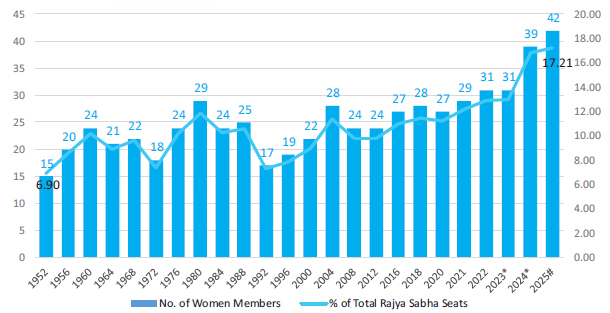
In 1952, 15 women members joined the Rajya Sabha (6.9% of total). This number has grown to 42 members (approximately 17% of the total) by 2025. (Table 3). A complete trajectory of near steady growth in women membership in Rajya Sabha from 1952 to 2025 is presented in Figure 5. Despite being constituted through indirect elections and nominations, the women’s representation in Rajya Sabha is an important component of Indian parliamentary democracy.
Table 3: Women Members in the Rajya Sabha (1952–2025)
| Year |
Women Members |
% of Total |
Year |
Women Members |
% of Total |
| 1952 |
15 |
6.9% |
2000 |
22 |
9.0% |
| 1956 |
20 |
8.6% |
2004 |
28 |
11.4% |
| 1960 |
24 |
10.2% |
2008 |
24 |
9.8% |
| 1964 |
21 |
8.9% |
2012 |
24 |
9.8% |
| 1968 |
22 |
9.6% |
2016 |
27 |
11.0% |
| 1972 |
18 |
7.4% |
2018 |
28 |
11.48% |
| 1976 |
24 |
10.2% |
2020 |
27 |
11.20% |
| 1980 |
29 |
11.9% |
2021 |
29 |
12.2% |
| 1984 |
24 |
10.3% |
2022 |
31 |
12.9% |
| 1988 |
25 |
10.6% |
2023* |
31 |
13.0% |
| 1992 |
17 |
7.3% |
2024* |
39 |
16.81% |
| 1996 |
19 |
7.9% |
2025# |
42 |
17.21% |
Note: While calculating percentage, vacant seats have been excluded.
* As on 31st December, 2024. # As on 4th December, 2025.
Sources: Electoral Statistics at a Glance-2025.
Figure 5: Women Members in Rajya Sabha (1952–2025) with Percentage Trend
6. Analysis of Gender Participation Indicators
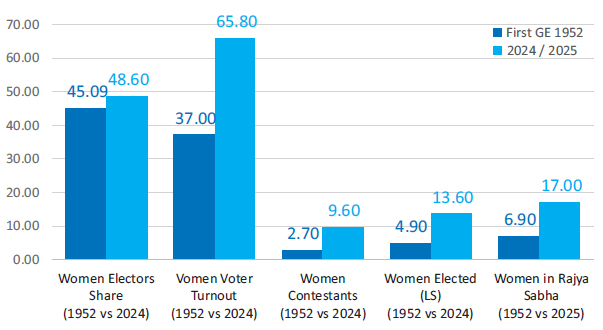
The Gender Ratio in the electorate rose from 821 in 1952 to 946 in 2024 — a 14.3% improvement. In absolute terms, men as electors increased by 416% over this period, while women as electors increased by 489.7%, reflecting a consistently faster growth rate. The gender gap in voter turnout declined from -16.7 percentage points in 1962 to +0.17 in GE 2019 and remained near-parity at -0.2 percentage points in GE 2024. Figure 6 provides a consolidated comparison of key gender participation indicators between the first General Election and the most recent available data. True that percentage wise the representation has shown an upward trend but the proportionate representation in terms of numbers remains low even in 2024. (Figure 4)
Figure 6. Key Gender Participation Indicators — First GE (1952) vs Latest Available Data (2024–25)
7. ECI’s Strategies and Initiatives for Gender Mainstreaming
The Election Commission of India has worked on the principle of inclusivity to address the gender gap in electoral participation since the first General Election. Three broad phases of ECI intervention are identifiable.
7.1 Early Foundational Interventions (1947–1970s)
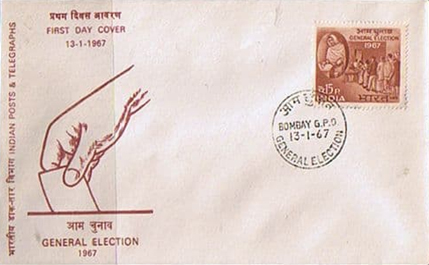
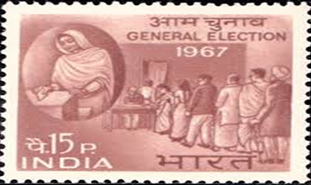
The most consequential early intervention was the mandatory registration of women by their own names — establishing women’s individual electoral identity distinct from their families. Separately, 27,527 all-women polling booths were established in GE 1951–52, with at least one woman officer at every polling station. The ECI also leveraged mass communication: a postage stamp and First Day Cover featuring a woman voter at the ballot box were released on the eve of the 1967 General Election (Photographs 2&3).
Photographs 2 and 3: First Day Cover and postage stamp released by the Department of Posts, Government of India, on the eve of the 1967 General Election — an early innovation to encourage women’s electoral participation
Source: India Postal Department / colnect.com
7.2 SVEEP — Systematic Voter Education and Electoral Participation
SVEEP, the ECI’s flagship voter education programme (launched 2009), is a multimedia, multi-intervention programme reaching over 980 million voters across more than one million polling stations, operating under the overarching premise of “No Voter to be Left Behind.” Key women-specific interventions include:
- All-women ‘Pink Polling Booths’ staffed entirely by women officials
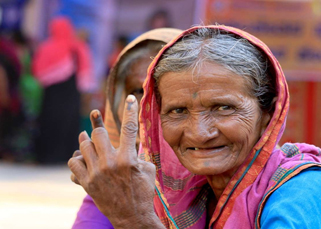
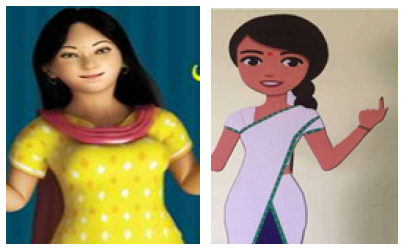
- Women Election Icons, Campus Ambassadors and State/ District-level mascots (Photograph 4&5)
- Women-focused media campaigns using vernacular language and folk imagery
- Electoral Literacy Clubs (ELCs, launched 2018) in educational institutions
- National Voters’ Day celebrations (since 25 January 2011) with annual gender-focused themes
- Partnership with Ministry of Women and Child Development; engagement of Self-Help Groups.
Photograph 4: Woman voter displaying inked finger after casting vote, General Election 2019
Source: Election Commission of India.
Photograph 5: Women Voter Mascots under SVEEP — Ananya (West Bengal) and Bhoni (Assam) (2014)
Source: Election Commission of India.
7.3 Assured Minimum Facilities at Polling Stations
All polling stations are mandated to provide Assured Minimum Facilities including: separate queues and toilets for women, priority voting, drinking water and shade, child care facilities and equal access infrastructure for PwDs and senior citizens. These facilities directly address physical barriers to women’s electoral participation.
8. The Third Gender in Electoral Democracy
Prior to 2009, electors were registered under “Men” or “Women” categories only. In 2009 the ECI introduced a third option (“Other”). Following the Supreme Court’s landmark 2014 judgment recognising transgender persons as a “third gender” and directing measures against discrimination, the ECI reclassified the registration category from “Other” to “Third Gender” from 2014. Individuals retain the option to register as Male, Female or Third Gender. The Third Gender electorate stood at 48,272 in GE 2024, with 6 transgender candidates contesting the election.
9. Gaps and Challenges in Women’s Representation
ECI’s strategies right from the beginning for enhancing women’s participation have resulted in steady progress and consolidation in terms of key indicators as discussed in the paper. However, despite constitutional guarantees and sustained ECI strategies, significant gaps remain in the numerical representation of women in Parliament and State Legislatures. India’s women’s representation in the Lok Sabha at 13.6% (GE 2024) remains considerably below the Inter-Parliamentary Union (IPU) global parliamentary average of approximately 26.5% (IPU, 2024). Chhattisgarh records the highest at approximately 21%; Himachal Pradesh has one woman MLA and Mizoram has none (PRS India, 2024). These gaps reflect structural barriers — including party nomination practices, campaign financing constraints and social norms — that could not be fully addressed by ECI interventions alone. It was imperative to conclude the long debate on reservation of seats for women at National and State level by way of Legislative support.
In this context the Constitution (One Hundred and Sixth Amendment) Act, 2023 is a very well-deserved step that goes into the chronicle of Indian Electoral Democracy for empowerment of women.
10. Landmark Legislations for Women’s Representation
10.1 The 73rd and 74th Constitutional Amendments, 1993
The 73rd and 74th Constitutional Amendments (both in force from 1993) mandated not less than 33% reservation for women in Panchayati Raj Institutions (PRIs) and Municipalities under Articles 243D and 243T respectively. Several state legislatures have since enhanced this reservation to 50% or more. These amendments remain among the most consequential affirmative action provisions for women’s political participation in India.
10.2 The Constitution (106th Amendment) Act, 2023
The Constitution (One Hundred and Sixth Amendment) Act, 2023 — “the Nari Shakti Vandan Adhiniyam” — provides 33% reservation for women in the Lok Sabha and in Legislative Assemblies of all states, including the NCT of Delhi. The Act will come into force on a date appointed by the Central Government and will be implemented following the delimitation exercise to be conducted on the basis of the census slated for 2026. When implemented, this reservation will substantially transform women’s numerical representation in Lok Sabha and State Legislative Assemblies.
11. Conclusion
The seven decades plus of Indian electoral democracy present a substantive, if uneven, narrative of sustained gender inclusion. The Electorate Gender Ratio has risen from 821 to 946; women voter turnout has equalled and in 2019 exceeded that of men; and landmark legislations at grassroots (1993), parliamentary and state levels (2023) have transformed the architecture of women’s representation. The strategies adopted under SVEEP — multimedia outreach, Pink Polling Booths, Electoral Literacy Clubs and targeted interventions for women have demonstrated measurable impact. India’s women’s representation in the Lok Sabha at 13.6% in 2024, while representing significant progress from 4.9% in 1952, remains below the global average and the 33% target set by the 106th Amendment. Nevertheless, the ECI must continue its strategic initiatives to deepen the quality and breadth of gender participation under electoral democracy. The path ahead calls for sustained institutional commitment, efficient implementation of legislative provisions and societal transformation by continued empowerment of women.
The recognition of the Third Gender in the electoral architecture is a further landmark in the realisation of universal adult suffrage.
References
Election Commission of India. (2024). General election to Lok Sabha 2024: An atlas. Election Commission of India.
Election Commission of India. (1952-2025). Statistical publications. Election Commission of India.
Government of India. (1949). The Constitution of India. Legislative Department.
Inter-Parliamentary Union. (2024). Women in national parliaments: World average. IPU Parline.
Khan, N. (2015). Political status of women in Indian parliament: An analysis. Indian Journal of Political Science, 76(4), 966–970.
Press Information Bureau. (2025, July 30). Government is promoting greater participation of women in local governance and political leadership roles. Government of India.
PRS Legislative Research. (2024). Women in parliament and state assemblies.
Rajya Sabha Secretariat. (2003). Women members of Rajya Sabha 2003. Rajya Sabha Secretariat.
Rajya Sabha Secretariat. (2019). Rajya Sabha: The journey since 1952. Rajya Sabha Secretariat.
The Times of India. (2021). The 15 forgotten women leaders of the Constituent Assembly of India.
United Nations. (1948). Universal Declaration of Human Rights.
United Nations. (1966). International Covenant on Civil and Political Rights (ICCPR). UN Treaty Collection.
United Nations. (1979). Convention on the Elimination of All Forms of Discrimination Against Women (CEDAW). United Nations.
UN Women. (1995). Beijing Declaration and Platform for Action.
About Author
S D Sharma is a former IAS officer and an expert in electoral administration, constitutional policy planning and democratic governance. He served as the State Election Commissioner of Jharkhand and Senior Fellow, ECI and held several senior positions in the Government of India and state administrations. He has contributed extensively to research and documentation initiatives of the Election Commission of India and international electoral organizations. He contributed to establishing the India A-WEB Centre and led research on global initiatives on elections under the ECI and is the Founder Editor of the A-WEB India Journal of Elections. His areas of interest include electoral integrity, voter education, comparative electoral systems and democratic participation.
This article, originally published in the Indian Journal of Electoral Studies (IJES), Volume I, Issue No 1, is reproduced in Socio-Economic Voices on Indiastat in recognition of its continuing relevance to the evolving discourse on gender and electoral democracy in India, as well as its contribution to evidence-based research and public policy.
Disclaimer : The opinions expressed in this article are the personal opinions of the author. The facts and opinions appearing in the article do not reflect the views of Indiastat and Indiastat does not assume any responsibility or liability for the same.
indiastat.comJune, 2026
socio-economic voices




.jpg)







.png)